Back to blog
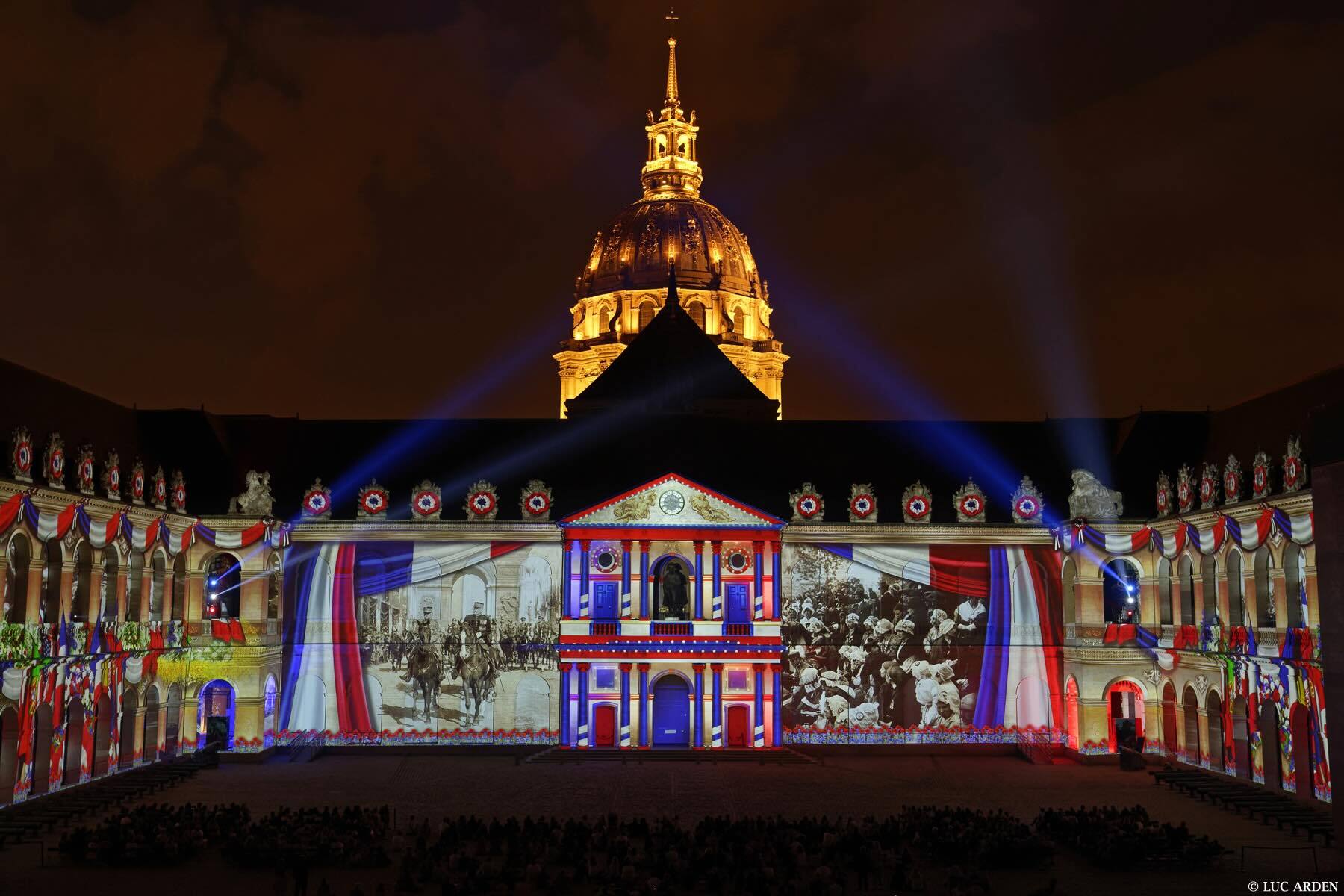
Imagine turning a historic façade into a living canvas, or transforming a corporate venue into a fully immersive experience. That’s exactly what video mapping makes possible. Video mapping is an audiovisual technique that projects animated content onto real surfaces—such as buildings, stages or three-dimensional elements—perfectly adapted to their shape, volume and architecture.
In event planning, video mapping has become a high-impact tool. It creates emotion, communicates messages in innovative ways, and transforms any space into a memorable experience. From brand launches and concerts to gala dinners and cultural events, its immersive power sets it apart.
Beyond visual spectacle, video mapping requires precise technical planning, cutting-edge equipment and an experienced AV partner. In this article, we explore how video mapping works, the different types and techniques available, and what you need to know to apply it successfully to your event.
How do 3D projections work in video mapping?
At the core of video mapping projection is the ability to project animated images that adapt millimetre by millimetre to the surface they are displayed on. Unlike traditional projection, content is not shown on a flat screen, but on real objects: domes, façades, sculptures, vehicles or even tables.
To achieve this immersive visual effect, three key elements must come together:
1. 3D scanning or modelling of the surface
The first step is to accurately capture the dimensions and shapes of the object or structure to be mapped. This can be done through photography, laser scanning or 3D design. Based on this data, a virtual model is created and used as the foundation for developing the visual content.
2. Creation of animated content
Once the model is defined, custom visuals—videos, textures and animations—are designed to integrate seamlessly with the real volumes and reliefs. This is where visual storytelling comes into play. Graphics must tell a coherent story, surprise the audience and create emotion, while always respecting the physical limits of the space.
3. Projection, warping and blending
The next step is aligning the projectors perfectly with the real surface. This involves several advanced techniques:
- Warping: deforming digital content so it fits precisely with the geometry of the real object.
- Blending: calibrating and merging multiple projectors to cover large surfaces without resolution loss or overlaps.
- Control software: tools such as Resolume Arena, Watchout or Modulo Piallow content programming and synchronisation with sound, lighting or scenic elements.
For large-scale events, projectors ranging from 20,000 to 40,000 lumens are typically used to ensure visibility and sharpness, even outdoors or on highly illuminated surfaces.
The key to success lies in technical precision and exhaustive planning. That’s why working with a specialised AV partner makes the difference between a striking projection and a failed experience.
Advantages of video mapping for corporate, cultural and brand events
Video mapping doesn’t just impress visually—it has become a strategic tool for agencies, brands and event organisers looking to stand out, surprise audiences and generate engagement.
Here are some of its main advantages:
1. Space transformation without altering physical structures
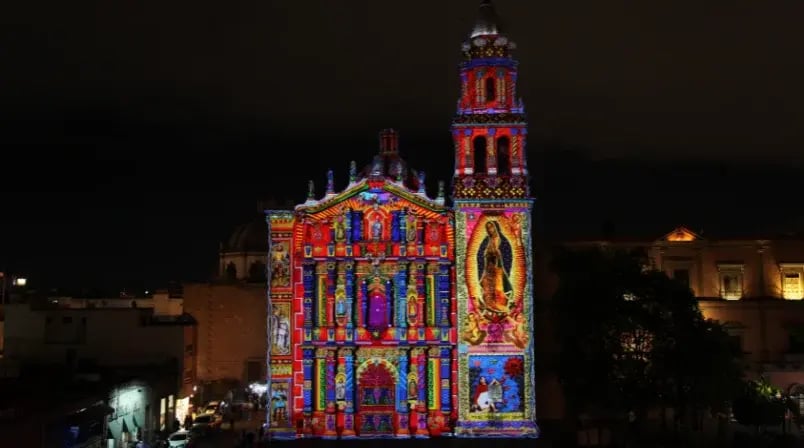
Video mapping allows you to completely change the perception of a space—from a blank wall to complex architecture—without the need for any physical intervention. This is especially valuable in historic venues, protected buildings or temporary spaces where traditional installations are limited.
2. Immersive storytelling
Great mapping content doesn’t just decorate—it tells a story. By adapting visual narratives to the architecture of the space, messages become more powerful, emotional and memorable. For brand events, launches or gala evenings, this creates a lasting impact that’s hard to forget.
3. Adaptability to different event formats
From corporate and cultural events to retail activations and product presentations, event projection mapping adapts to multiple scales and objectives. It can act as the main show element or as a complementary visual layer.
4. Strong appeal for media and social networks
The spectacular nature of immersive projection makes it naturally shareable. Attendees tend to film, photograph and post it online, multiplying its reach across social media and digital channels without additional media investment.
5. Differentiation and perceived value
When used correctly, video mapping projection positions an event as technologically advanced and visually refined. For global brands and agencies, this reinforces an image of innovation and leadership.
Most common video mapping techniques in audiovisual production
Video mapping can be applied in many different ways depending on the event type and desired impact. Beyond where the content is projected, understanding how it is technically produced is essential. These are the most common techniques used in advanced audiovisual production:
Regarding application type in events
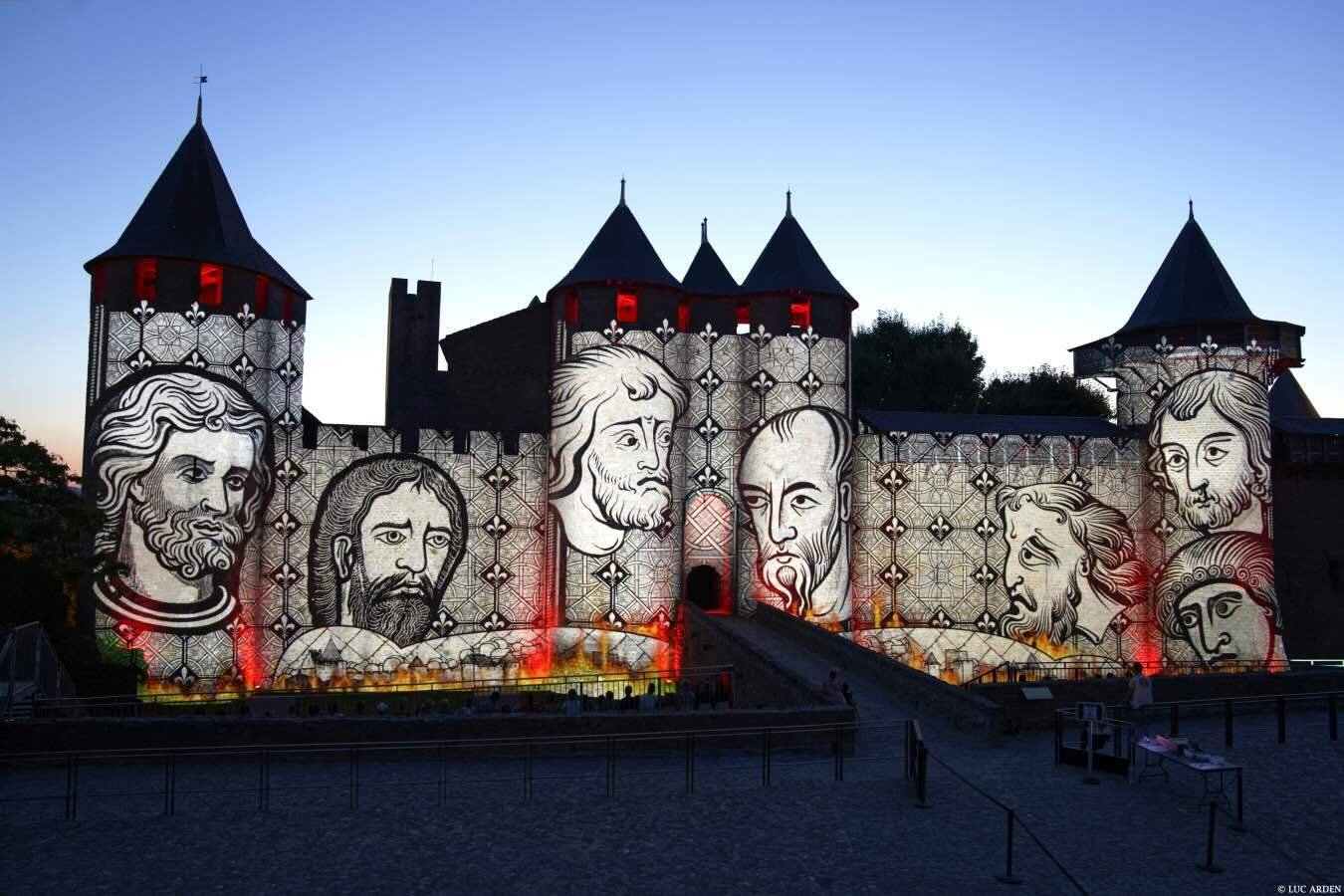
- Architectural mapping: used on façades and outdoor spaces, turning buildings into dynamic canvases. Ideal for inaugurations, festivals and urban activations.
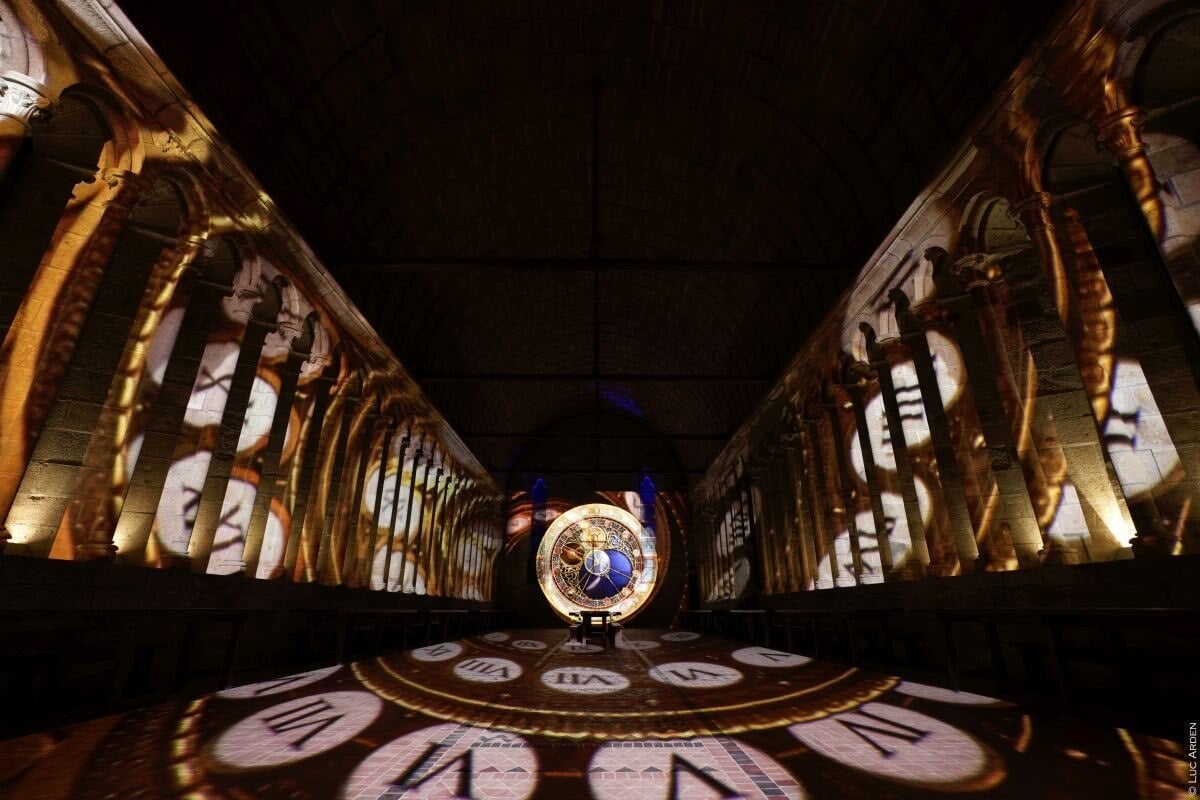
- Scenic (indoor) mapping: integrated into sets, stages or physical structures indoors. Perfect for conventions, gala dinners and presentations.
- Product mapping: direct projection onto physical products such as cars, bottles, furniture or luxury items to highlight shapes and build visual storytelling.
- Interactive mapping: combines real-time tracking with reactive content. Technologies like Naostage, powered by AI tracking, allow performer or audience movements to trigger mapping effects without physical sensors.
- Immersive mapping: surrounds the audience with projected visuals on walls, ceilings and floors, creating a fully sensory experience.
Regarding audiovisual production technique
- 2D mapping: the most basic form, aligned to flat or slightly irregular surfaces.
- 3D mapping: uses 3D models of the structure to simulate depth, deformation and realistic interactions—often referred to as 3D projection or 3D mapping.
- Volumetric mapping: projection on complex three-dimensional surfaces, requiring advanced 3D scanning and precise warping.
- Generative mapping: content generated in real time, responding to music, movement or live data inputs.
- Multisensory mapping: integrates surround sound, lighting, vibration or even scent to create complete immersive experiences.
Each technique demands a precise combination of projection equipment, software, custom content and technical planning. This is why working with an expert AV partner like Novelty is essential to ensure a professional result—both visually and operationally.
How much does video mapping cost? Key factors that impact the budget
One of the most common questions from agencies and brands considering video mapping is: How much does it cost? The short answer is that it depends.
A video mapping production can range from a few thousand euros to five- or six-figure budgets, depending on scope, complexity and technical quality. These are the main factors that influence the final cost:
1. Surface and venue characteristics
- Is it a monumental façade or a smaller indoor structure?
- Is the surface flat, curved or irregular?
- Is 360º mapping required, including ceilings, floors or multiple planes?
The more complex the geometry or the larger the surface, the more equipment and planning are required.
2. Number and power of projectors
The quantity of projectors, their brightness (measured in lumens) and resolution directly affect cost. For example:
- Outdoor mapping requires 20,000 lumens or more to overcome ambient light.
- Highly detailed projects often need multiple projectors synchronised through blending.
3. Custom audiovisual content
Content creation is one of the most decisive budget factors. This includes:
- Animation length
- Level of 2D or 3D detail
- Narrative and branding integration
- Music and sound synchronisation
Content can range from basic templates to fully bespoke creations developed with tools like After Effects, Cinema 4D or Unreal Engine.
4. Technical teams and AV partner
Having the equipment is not enough—you need professionals who master the technique, software and live coordination. Final quality depends on:
- Technical production management
- Media server and projection operators
- Visual designers and programmers
- Coordination with lighting, sound, and scenic elements
5. Installation and setup time
Video mapping requires testing, fine-tuning and calibration. Setup times are usually longer than other AV solutions, affecting logistics and venue availability.
The most effective approach is to request a custom proposal from a specialised provider who can assess your space, creative goals and technical needs. At Novelty, we work with international brands to adapt each video mapping project to its scale, concept and budget without compromising on quality.
Checklist: is your event ready for video mapping?
Integrating video mapping into events isn’t just about budget or innovation. It also depends on technical and logistical readiness. This practical checklist will help you evaluate whether your event is prepared.
Venue space and architecture
- Does the venue offer a suitable projection surface (wall, façade, 3D volume)?
- Is the geometry compatible with flat, 3D or immersive mapping?
- Is there enough distance and access for correct projector placement?
If the answer is yes, your space has strong video mapping potential.
Visual and narrative content
- Do you have a clear message or story to project?
- Is the visual narrative part of the event’s overall storyline?
- Is the content aligned with branding, timing and audience profile?
Strong content turns a beautiful projection into an emotional, purpose-driven experience.
Technical equipment and AV partner
- Are you working with an AV partner experienced in video mapping projection?
- Do you have the right software and projection equipment?
- Is your team ready to synchronise lighting, sound and visuals?
Success depends largely on the technical know-how behind the execution.
Production and setup timing
- Is there enough time for testing, adjustments and calibration?
- Is the venue available in advance for technical rehearsals?
- Does the event schedule allow moments where mapping can truly shine?
Video mapping requires rehearsal, precision and planning. The event logistics need to adapt to its scheduled timeline.
Ready to create an unforgettable audiovisual experience with video mapping?
Video mapping is far more than a visual trend. It’s a strategic tool that combines creativity, technology and technical precision to transform any event into a memorable experience.
Whether for a gala dinner, product launch, cultural event or brand activation, at Novelty we design and deliver custom video mapping projects, backed by international experience and state-of-the-art equipment.
Ready to transform your space into a visual experience no one will forget?