Back to blog
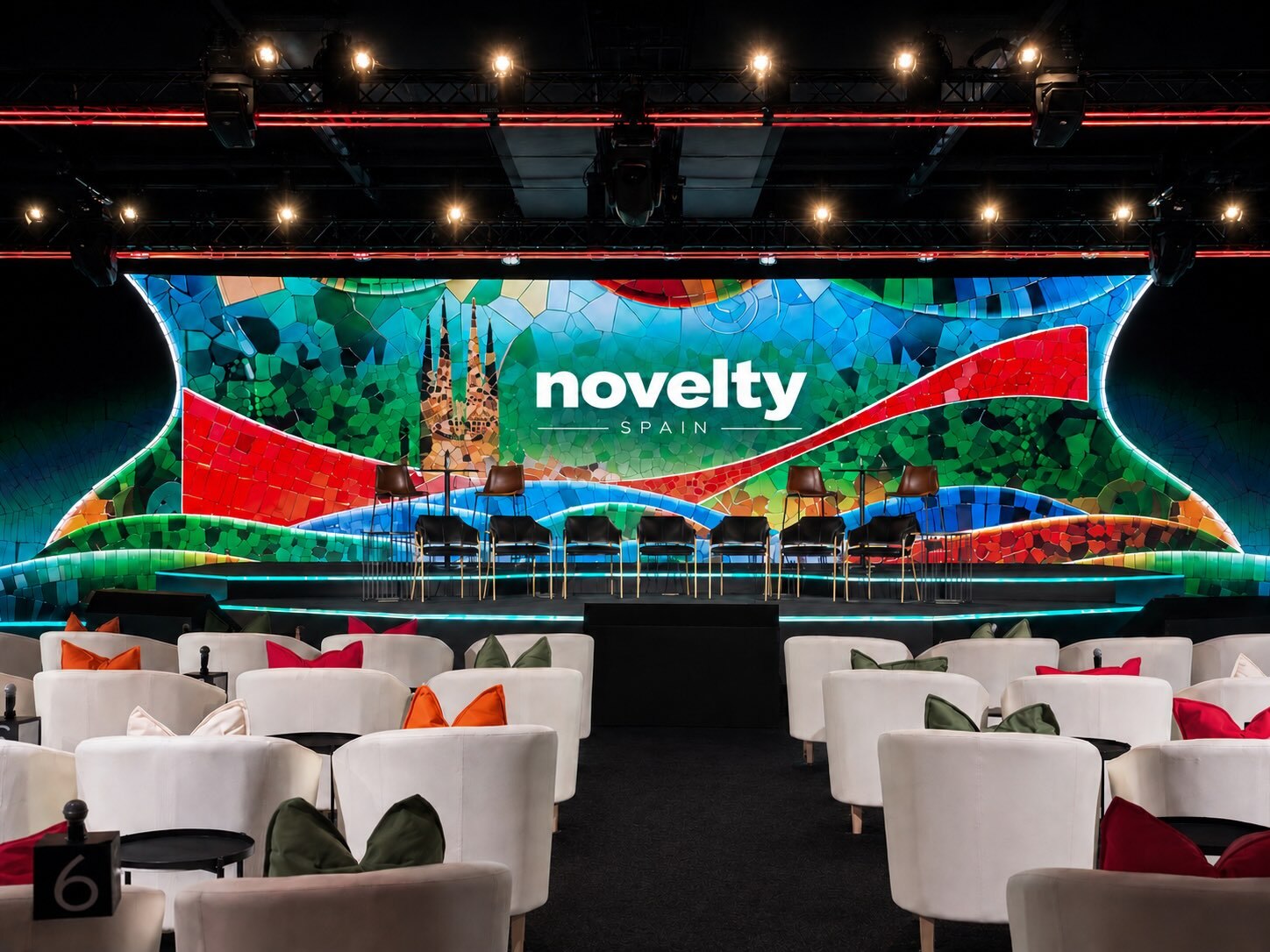

Some events are forgotten as soon as the applause ends. Others stay with attendees for years. The difference rarely comes down to the budget. More often, it's the stage design and the way stage lighting guides every emotion throughout the event.
Stage design is one of the most influential elements in the success of corporate events. The combination of colours, shapes, scenic elements and lighting techniques allows organisers to tell compelling stories, communicate a brand's message and create a genuine connection with the audience. When executed to the highest technical standards, an ordinary venue becomes an experience people remember long after the event ends.
Stage design is both an artistic and technical discipline. It determines how the event's content will be presented and transforms a creative concept into a tangible experience through scenic design, event lighting, audiovisual elements and technical execution. While it originated in theatre and opera to immerse audiences in the story, it has become an essential component of modern corporate event production.
A well-planned stage design integrates lighting, sound, visual effects, furniture layout and décor into a cohesive environment. The objective to create a setting that reinforces the event's message while delivering an immersive experience for every attendee. In this article, you'll discover why stage lighting plays such a critical role in AV production, along with six practical lighting techniques that will help elevate your next event.
Why is stage design important for corporate events?
At corporate events, the stage naturally becomes the focal point for every attendee. That's why effective stage design is not just decoration, but rather the process that transforms an ordinary venue into a memorable environment capable of engaging audiences and reinforcing your brand message from beginning to end.
Within that process, stage lighting is arguably the most influential element. Well-executed lighting improves visibility for keynote speeches, live performances and audiovisual presentations. But its impact goes much further. With the right lighting techniques, you can create immersive environments using textures, colours, dynamic effects and even custom corporate gobos, adapting the atmosphere to every moment of the event.
When event lighting works smoothly alongside the rest of your AV solutions, the resulting benefits include:
- Better product presentations through highlighting textures, colours and key design details.
- More precise audience attention as the lighting directs attention exactly where it needs to be throughout the event.
- An increase in the perceived quality of the entire production, strengthening your brand image.
- The creation of memorable experiences that attendees will associate with your company long after the event.
- Stronger brand identity and values without relying solely on spoken messages.
At large-scale international events, where technical excellence is non-negotiable, investing in professional audiovisual production is often what separates a competent event from one that leaves a lasting impression.
Below, we'll explore six stage lighting techniques that can improve the visual experience, strengthen your brand message and maximise the impact of your corporate event production.
1. Use layered lighting to create depth
Layered lighting is one of the most effective lighting techniques for adding dimension and realism to any stage design. Instead of relying on a single light source, several lighting functions work together:
-
A key light establishes the main focal point.
-
A fill light softens harsh shadows.
-
A backlight separates the presenter or product from the background.
The backlight is particularly important because it creates a strong sense of visual depth. Without it, speakers and products can appear flat against the backdrop, both for the live audience and on camera.
Background lighting completes the composition by adding subtle illumination that enhances the environment while reinforcing the perception of depth.
This layered approach gives lighting designers complete creative control. It allows them to highlight key moments, minimise distractions and build carefully balanced scenes throughout the event. It is especially valuable during product launches and hybrid events where cameras need to capture high-quality images.
Control light intensity
Within a layered lighting design, intensity is one of the most important variables to manage. More light doesn't always produce better results. Adjusting brightness to suit each scene and atmosphere is a must. Excessively bright lighting may create impact during key moments, but it can quickly become uncomfortable for attendees if maintained for too long.
Light intensity also affects technical performance in ways that are often overlooked. Poorly balanced lighting can reduce LED screen visibility, affect image quality or create exposure issues for cameras during streaming and event recording.
2. Design dynamic lighting scenes to keep your audience engaged
A static stage quickly loses the audience's attention. One that evolves throughout the event keeps people engaged from the first moment.
Dynamic stage lighting uses moving fixtures and programmable lighting systems to create transitions through changes in position, colour and intensity.
The secret lies in planning every lighting cue in advance. Each segment of the event, whether it's a keynote presentation, product reveal, video playback or live performance, should have its own visual atmosphere, supported by smooth transitions that improve the pace without becoming distracting.
Carefully programmed changes in colour and brightness naturally guide the audience's focus towards what matters most at any given time.
To achieve this level of precision, the lighting needs to be perfectly synchronised with sound, video and on-screen content. This is where DMX-controlled lighting systems become invaluable, allowing every lighting scene to be programmed in advance and executed flawlessly throughout the event.
This level of coordination transforms lighting into visual storytelling rather than a series of isolated effects, making it one of the most powerful lighting techniques used in modern corporate events.
Keep your event objectives in mind
With so many creative possibilities available, it's easy to become carried away by technology. That being said, every lighting decision should support the event's objectives.
Before programming your lighting scenes, ask yourself the following questions:
-
Are you launching a new product? Direct attention to the product at the perfect moment.
-
Do you want to create an intimate atmosphere? Choose warmer colour temperatures and subtle transitions.
-
Is your priority reinforcing a key message? Reserve your most dramatic lighting moments for maximum impact.
Every lighting choice should contribute to the event's purpose. An impressive lighting display has little value if it distracts from the story that you're trying to tell.
Likewise, a corporate convention requires a completely different approach from a luxury product launch. Understanding your audience and designing the lighting experience around their expectations is what ultimately delivers memorable results.
3. Integrate stage lighting with LED screens and visual content
Today, almost every corporate event relies on LED screens. This in turn creates one of the most common technical challenges in AV production: making sure that stage lighting and visual content work together without competing for attention.
When executed properly, this integration creates an immersive stage design where lighting and video become part of the same visual experience. When poorly executed, excessive lighting washes out the LED screens, reducing contrast and weakening the impact of the content.
There are three key principles to achieving a seamless integration.
AV synchronisation
Lighting should complement what's happening on the LED screens, reinforcing key moments without overpowering the visuals. When both systems follow the same programming timeline, the audience experiences a single, cohesive production rather than separate audiovisual elements.
Contrast
Too much ambient light directed towards LED displays reduces image sharpness and colour accuracy, particularly on camera.
The solution is to carefully control light intensity around the screens and precisely position fixtures so that they illuminate presenters and scenic elements without spilling onto the LED surface.
Colour temperature
When stage lighting and screen content use significantly different colour temperatures, the result can feel inconsistent and unnatural, especially during live streaming or recorded productions.
Matching lighting colour temperature to the dominant tones of the visual content creates a balanced image for both in-person audiences and remote viewers.
Mastering the relationship between lighting and video is one of the most valuable AV solutions for improving the perceived quality of an event while protecting your brand's visual identity.
4. Use architectural lighting to transform the venue
Architectural lighting focuses on the venue itself rather than the stage. Walls, ceilings, columns and façades become part of the visual experience, completely changing how attendees perceive the space.
Within stage design, architectural event lighting offers countless creative possibilities. It can reinforce your corporate identity by illuminating the venue in your brand colours, create illuminated pathways that naturally guide attendees through the space, or highlight unique architectural features such as vaulted ceilings, glass façades or historic details.
It also helps unify venues with different architectural styles, creating a consistent visual identity throughout the event.
Among all lighting techniques, architectural lighting often delivers one of the greatest visual transformations while requiring relatively few fixtures on stage.
Consider the atmosphere that you want to create
Beyond the technical requirements, every event needs the right atmosphere—and lighting is one of the most powerful tools for creating it.
An evening gala requires a completely different approach from a daytime conference or a product launch. Each format demands its own lighting language.
Use these points as general guideline:
-
Gala dinners and corporate celebrations: warm colour temperatures, moderate intensity and soft contrasts create an elegant, welcoming atmosphere.
-
Conferences and keynote presentations: neutral, consistent lighting prioritises visibility and keeps the audience focused on the speaker.
-
Product launches: bold contrasts and carefully placed colour accents build anticipation and direct attention towards the reveal.
-
Corporate parties and networking events: saturated colours, movement and dynamic lighting effects generate energy and encourage interaction.
The most successful corporate event production projects define the desired atmosphere from the earliest planning stages rather than treating lighting as a last-minute adjustment.
5. Prioritise speaker visibility and the audience experience
Even the most spectacular stage design loses its impact if attendees cannot clearly see what's happening on stage.
Every lighting decision should begin with one simple question: Can everyone see the stage clearly from every seat in the venue?
A lighting design may appear perfect from the front row but perform very differently from the back or side sections. Testing multiple viewing angles before the event ensures that every attendee enjoys the same high-quality experience.
Presenters also require special attention.
They need sufficient illumination to remain clearly visible without being blinded by the fixtures or casting harsh shadows across their faces. Careful fixture positioning and beam angles help eliminate unwanted reflections while maintaining a natural appearance throughout the presentation.
For hybrid events, live broadcasts and recorded productions, the technical requirements become even more demanding.
Before approving the final lighting design, it's important to verify:
-
Shadow placement and beam angles to avoid distracting facial shadows or reflections on LED screens.
-
Camera performance to make sure that the lighting appears balanced through the lens as well as to the live audience.
-
Streaming quality so that remote viewers can enjoy the same professional visual experience as attendees in the room.
This dual approach, optimising both the audience experience and camera performance, is fundamental to professional audiovisual production.
6. Adapt your lighting techniques to each type of corporate event
No single lighting strategy works for every event.
The real skill in stage design lies in selecting and combining the right lighting techniques according to each event's objectives.
Before developing your lighting concept, consider the event format:
-
Conferences and congresses: prioritise functionality with consistent lighting, excellent screen visibility and comfortable viewing conditions for long presentations.
-
Corporate galas and dinners: focus on atmosphere through architectural lighting, warm tones and subtle transitions that reinforce exclusivity.
-
Product launches: build the lighting around the reveal, using dynamic scenes synchronised with video content and reserving maximum visual impact for the key moment.
-
Trade shows and roadshows: prioritise flexibility with lighting systems that can be installed efficiently while maintaining consistent quality across multiple venues.
When to Use Each Lighting Technique
|
Lighting technique |
Primary benefit |
Best used for |
|
Layered lighting |
Creates depth and dimension |
Conferences |
|
Corporate gobos |
Reinforces branding |
Galas and brand experiences |
|
Architectural lighting |
Transforms the venue |
Dinners and premium events |
|
Backlighting |
Separates subjects from the background |
Streaming events |
|
Dynamic lighting |
Maintains audience engagement |
Product launches |
|
Corporate colour lighting |
Reinforces brand identity |
Brand activations and corporate events |
Successful stage design is never about using the largest number of lighting fixtures. It's about choosing the right lighting techniques to support the objectives of each event.
Layered lighting, dynamic lighting scenes, LED screen integration, architectural lighting, speaker visibility and adapting the lighting strategy to each event format all contribute to transforming a technically sound production into an unforgettable audience experience.
Behind every successful event is a carefully planned AV production, supported by experienced professionals who understand how every technical element works together.
If you're planning corporate events and need expert assistance, Novelty Spain can help you design a lighting solution tailored to your project, combining cutting-edge technology with internationally recognised technical standards.
Contact Novelty Spain to discuss your next project and request a personalised AV solutions proposal. Or, if you are just looking for equipment, explore our event lighting rental services and enjoy full technical support.

FAQs about stage design and event lighting