Back to blog
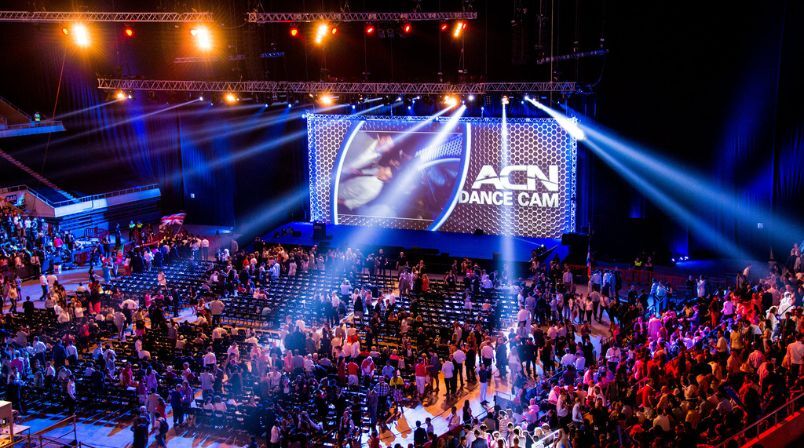

Stage lighting is much more than just a technical resource: it is one of the elements that most strongly influences how an event is perceived. Well-designed lighting doesn’t just allow the audience to see what’s happening on stage, it guides attention, creates atmosphere and reinforces the message that a brand wants to communicate.
In event planning where attention to detail is essential, stage lighting can make the difference between a correct setup and a truly memorable experience. From speaker visibility to the overall visual impact of the space, everything depends on how the lighting is designed and executed.
Its role is even more critical today, as events are no longer experienced only in person but also through video, streaming and post-event content. Well-planned event lighting enhances the attendee experience and ensures a professional result in any AV production.
1. Use front lighting to ensure clear visibility in stage lighting setups
Front lighting is the foundation of any stage lighting design. Its main purpose is to help make sure that speakers, products or key elements are clearly visible to the audience.
Without proper front lighting, common issues arise, including harsh facial shadows, lack of definition or even poor video capture quality.
To achieve a professional result be sure to:
- Position fixtures at a 30º–45º angle relative to the subject.
- Avoid completely flat lighting, which removes depth.
- Adjust the intensity to prevent glare or overexposure on camera.
In corporate event production, this type of lighting is essential for presentations, conferences and panel discussions, where visual clarity is critical for both in-person and streaming audiences.
2. Don’t overlook backlighting in stage lighting design
Backlighting is a key element in stage lighting, as it separates subjects from the background and adds depth to the scene.
Without it, speakers can visually blend into the background, reducing the overall impact. When used properly, backlighting creates a subtle halo effect that:
- Defines the subject’s silhouette
- Adds three-dimensionality
- Enhances on-camera aesthetics
When combined with front lighting, it creates a balanced and visually appealing result.
In technical AV production, backlighting is not only beneficial for the live audience, but also essential for achieving clean, well-defined images in recordings and live streaming.
3. Use uplighting to transform spaces with event lighting
Uplighting is one of the most widely used techniques in event lighting, thanks to its ability to completely transform a space without altering the set design.
It involves placing fixtures on the floor to project light upwards onto walls, columns or architectural elements.
This technique allows you to:
- Adapt the space to corporate colours
- Create different atmospheres throughout the event
- Add depth to neutral environments
With LED technology, colours and intensities can be adjusted in real time, offering great flexibility during the event.
In corporate events, uplighting enhances aesthetics while also reinforcing brand identity and creating a more immersive experience.
4. Utilize wash lighting for consistent stage illumination
Wash lighting is used to cover the stage with uniform light, ensuring a balanced base layer across all elements.
Wash fixtures allow you to:
- Illuminate large areas evenly
- Adjust colour temperature based on event needs
- Integrate seamlessly with other lighting techniques
This is especially useful in stages with multiple speakers or elements, where consistent lighting is essential to:
- Avoid poorly lit areas
- Maintain visual coherence
- Provide a foundation for additional lighting layers
Depending on the equipment used (Fresnel lenses, PC lenses, profiles, LED PARs or moving wash fixtures), you can control light spill and avoid unwanted illumination on set elements or screens.
5. Use gobos to enhance branding through stage lighting
Gobos are a classic yet highly effective tool in stage lighting, particularly when you’re looking to reinforce visual identity without adding physical elements. They allow you to project logos, patterns or textures onto walls, floors, or the stage itself.
In corporate events, thei main benefits of gobos are:
- Strengthening branding in a subtle, elegant way
- Adding visual dynamism
- Customising the environment with minimal setup
Their easy integration into existing AV production setups makes them a versatile solution. When used correctly, gobos elevate the perceived quality of the event and contribute to a more refined experience.
6. Add moving lights to create dynamic stage lighting effects
Moving lights are one of the most powerful tools in stage lighting when the goal is to add rhythm and energy to an event.
They break away from static lighting by enabling movement, colour changes and real-time effects, creating a more engaging experience.
They are particularly effective during:
- Openings and closings
- Product launches
- Transitions between segments
- Musical or experiential moments
For an impactful technical AV production, consider using the following equipment:
- Beam fixtures for fast movements and concentrated light beams
- LED wash moving heads for unique visual effects
- Spot moving heads with gobos and prism effects for textures and dynamic beams
Moreover, when integrated into a control system, moving lights can synchronise with music, video and stage design, creating immersive scenes aligned with the event’s storytelling.
7. Use followspots to highlight key moments in stage lighting
Followspots are a classic but highly effective stage lighting solution for directing audience attention to a moving subject.
They track a person or element in real time, ensuring continuous illumination across the stage.
They are commonly used in:
- Presentations with moving speakers
- Award ceremonies
- Performances or shows
- Runways or dynamic stage environments
Their main advantage is maintaining a clear focal point, preventing visibility loss.
In streaming events, they also help maintain a stable and professional image, even in scenes with significant movement.
What should you consider when designing stage lighting?
Beyond technical resources, effective stage lighting design requires strategic planning that considers the venue, the type of event and the overall corporate event production.
Space layout and positioning
Lighting design should adapt to the venue’s characteristics. Factors such as ceiling height, distance to the stage and rigging points directly affect equipment placement.
Poor planning can lead to:
- Unwanted shadows
- Uneven lighting
- Technical limitations
That’s why lighting should always be designed with a holistic view of the space.
Technical control and programming (DMX and AV integration)
Modern lighting relies on advanced control systems. Protocols like DMX allow you to:
- Program lighting scenes
- Synchronise lighting with sound and video
- Make real-time adjustments
In corporate events, where timing is critical, this integration guarantees a smooth execution.
Common stage lighting mistakes to avoid
Even with high-quality equipment, common mistakes can affect the final result. Some common errors include:
- Flat lighting with no depth
- Too much or too little intensity
- Not adapting lighting to content
- Lack of technical rehearsals
Avoiding these pitfalls is what separates an average event from a truly professional one.
The key is to approach stage lighting with a global perspective, where design, technology and execution work together seamlessly to deliver a precise and consistent result.
At Novelty, we approach every project with both technical and creative expertise to ensure this level of detail at every stage of the event. If you’d like to explore how to integrate advanced event lighting solutions into your project, you can discover our lighting solutions catalogue designed for demanding technical environments.
And if you’re planning a bespoke event and need a specialised partner in AV production, feel free to get in touch and request your AV quote.

FAQs about stage lighting